
Insights › Ingredients
Ingredients
Chlorella protein: how much there is, and why colour decides where you can use it
Chlorella is one of the most protein-dense biomasses available. It is also dark green and tastes of it, which is why most formulators never get to use the protein.
PhycoFerm · 11 August 2026 · 7 minute read
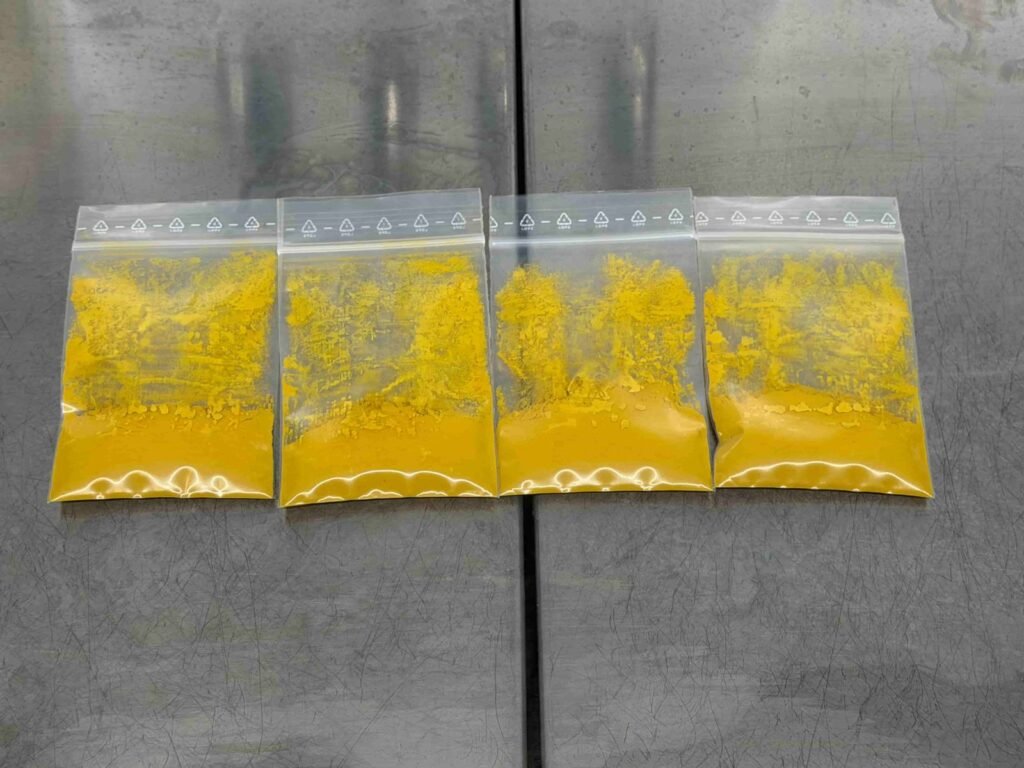
Same organism, same non-GMO status. The difference is chlorophyll.
The protein numbers
Chlorella typically carries between 40 and 55% protein as a percentage of dry weight, depending on species, strain and growth conditions. Our white strain is supplied at 50% protein. For comparison, that puts it in the same territory as soy protein concentrate and comfortably above most pulse flours.
The amino acid profile is the more interesting part. Chlorella protein contains all nine essential amino acids, with a lysine content that compares well against cereal proteins, which is exactly where wheat and rice-based formulations are weakest. As a complement to a cereal protein in a blend it does useful work.
One caveat: protein content is not the same as protein digestibility. Chlorella has a tough cellulosic cell wall, and intact cells limit how much of that protein is actually accessible. This is why the format matters as much as the number.
Whole cell or lysed
Mechanically disrupting the cell wall before drying changes the ingredient significantly. Lysed biomass gives better digestibility and makes intracellular compounds accessible rather than locked inside the cell, which is why it is the usual choice for supplements and pet nutrition.
Whole cell has its own advantages: lower processing cost, the full biomass in the matrix contributing texture as well as protein, and a single-ingredient declaration. Neither is universally better. They come from the same strain and the same fermentation, so the sensible approach is to try both in your specific product.
Now the actual problem
Conventional Chlorella is dark green, because it is full of chlorophyll, and it tastes strongly of what most people describe as pond. At 1 or 2% inclusion in a capsule or a tablet, neither matters. At the 5 to 15% inclusion you would need for a meaningful protein contribution in a beverage, a dairy alternative or a bakery product, both matter enormously.
So the protein is real, the amino acid profile is genuinely useful, and the ingredient still does not get used, because the formulator cannot make a pale product green and cannot mask the flavour at that loading. The constraint is sensory, not nutritional.
Algae rarely fails on nutrition. It fails on colour and taste, and that failure happens in the formulation meeting, not in the lab.
Chlorophyll-reduced and chlorophyll-free strains
Chlorophyll content is a strain characteristic and it can be selected for, or against. Through random mutagenesis and selection, without any recombinant DNA, it is possible to obtain Chlorella strains that produce very little chlorophyll or effectively none, while remaining the same species.
That gives two useful products. A white biomass that is chlorophyll-free, close to colour neutral and much milder in taste, which opens up pale matrices entirely. And a yellow biomass that is chlorophyll-reduced but retains lutein, which is useful where the pigment is an asset: pet food, feed, or supplements where the carotenoid is part of the claim.
The white strain is supplied at 50% protein. The yellow carries 35%, with beta-carotene and other carotenoids alongside it, so the choice between them is a question of what the pigment is worth in your product.
The regulatory position, briefly
The Chlorella species our white and yellow strains belong to is listed in the EU Novel Food Catalogue as having been consumed to a significant degree before 15 May 1997, which places it outside the scope of the Novel Food Regulation. Strains obtained by random mutagenesis and selection contain no recombinant DNA and carry no GMO labelling obligation.
The practical effect is that a chlorophyll-reduced Chlorella is not a new regulatory question. It is the same species, obtained by non-recombinant means, and the route to market is the well-trodden one.
What to do with this if you are formulating
- Decide the colour constraint first. It determines which variant you can use and it is not negotiable later.
- Ask for the certificate of analysis, not the brochure figure. Protein varies batch to batch and the number that matters is the one for the material you receive.
- Test both formats in your matrix. Whole cell and lysed behave differently in dispersion, mouthfeel and stability.
- Blend rather than replace. Chlorella protein complements cereal proteins well and rarely needs to carry a formulation alone.
If a target composition does not exist yet, it can usually be developed, because the colour, the protein content and the pigment profile are all strain characteristics and strains can be improved against a specification.
Request a Chlorella sample
10 g of white or yellow Chlorella biomass, whole cell or lysed, with composition data and a certificate of analysis.
More from our insights
Why growing algae in the dark changes the cost.