We develop non-GMO microalgae strains together with the fermentation processes that make them work at industrial scale, on growth media built from agro-industrial side streams and under real-time process control.
Inside the laboratory
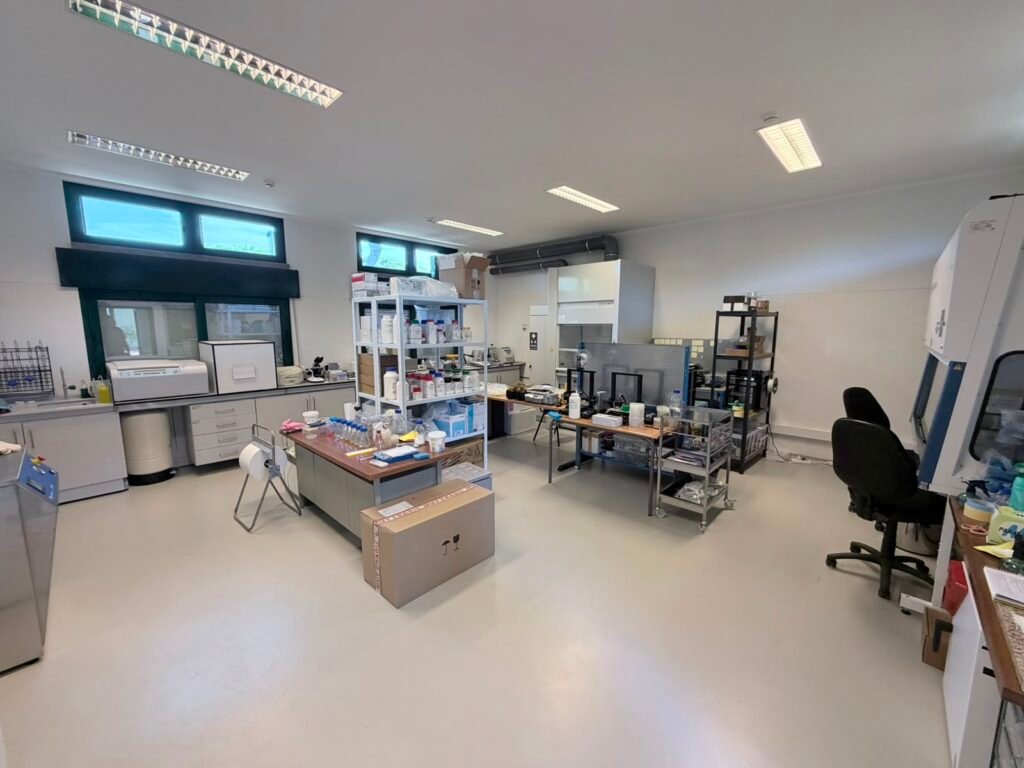
Our bioprocess lab at CRIA, University of the Algarve, Faro.
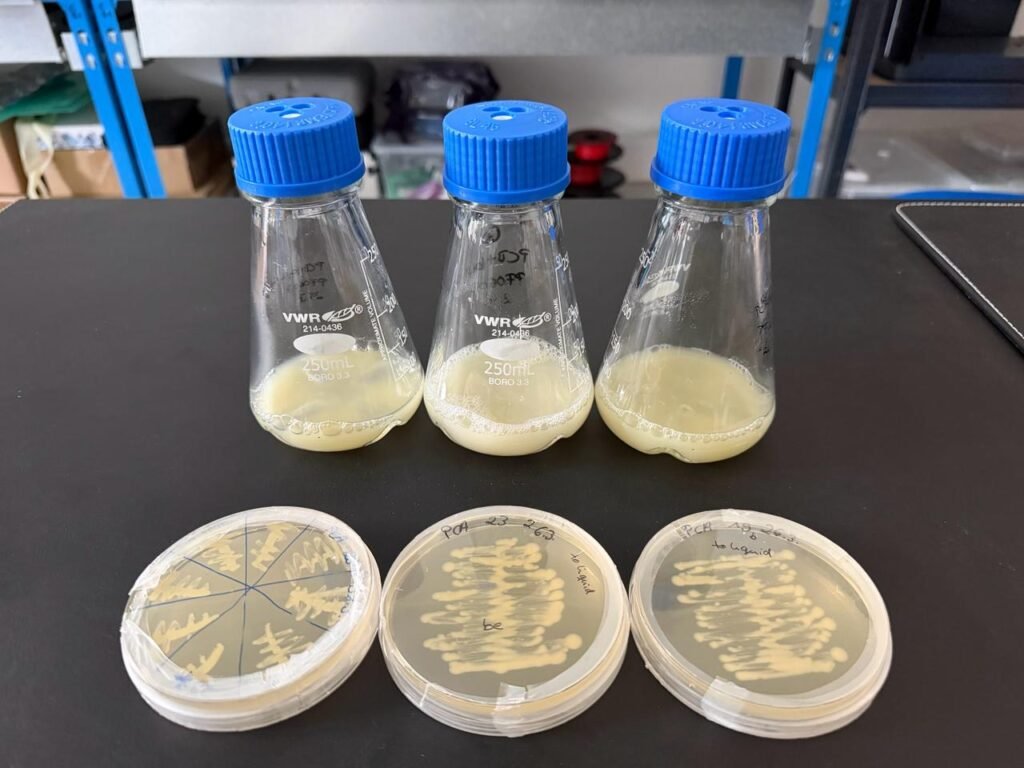
Strain isolates on plates and heterotrophic cultures in shake flasks, the first screen for any new route.
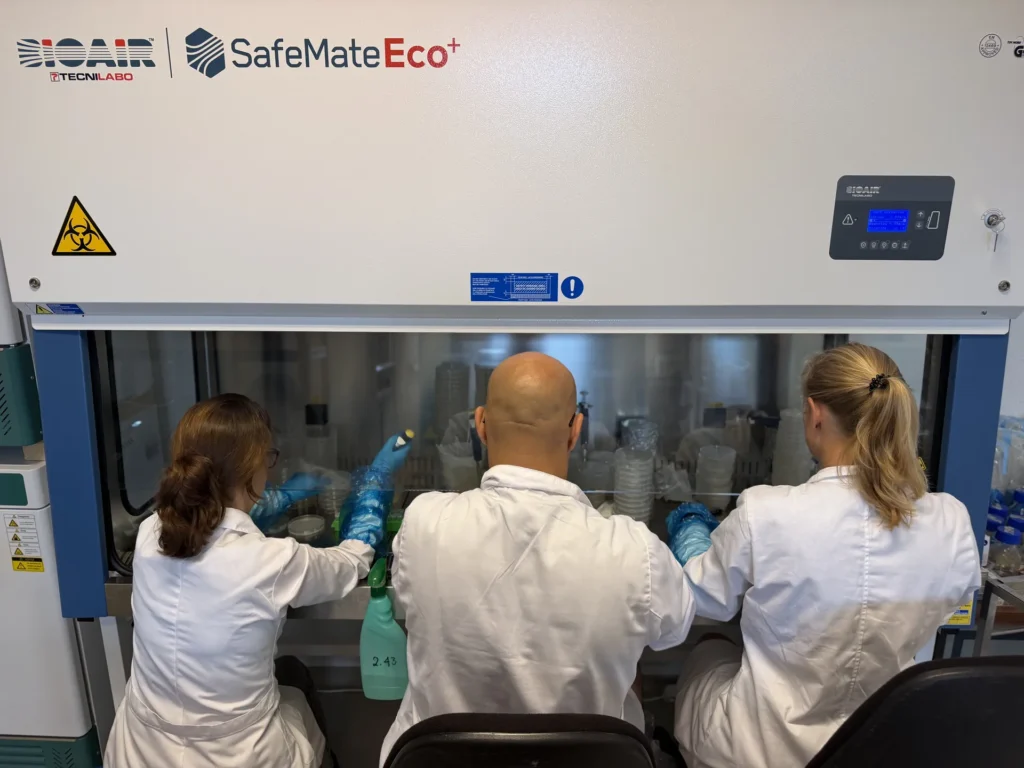
Non-GMO strain development under sterile conditions, by selection and adaptation.
Bioreactor and downstream equipment, where a laboratory result starts becoming a process.
The problem we work on
The biology of microalgae works. The challenge is everything after the laboratory: cost per kilogram, batch consistency and scale-up.
Conventional cultivation is light-limited, quality shifts with the season, and capital cost per tonne stays high. This is one of the reasons why algae, despite their potential, have never become part of everyday nutrition. They stayed a speciality product for a speciality market.
Our research route starts from what people need on their plate, then develop the strain and the process that get us there together. A route is finished when it holds at pilot volume, because that is where a solution starts reaching people’s plates.
The route
Four things that have to work at the same time
Pillar 01
Strain development
Selection, adaptation and non-recombinant improvement of non-GMO strains, screened for target compound content, productivity and robustness under industrial conditions.
Pillar 02
Heterotrophic fermentation
Closed stirred-tank fermentation, so growth does not depend on sunlight or season and the process can be controlled, repeated and audited.
Pillar 03
Circular growth media
Media formulated from regional agro-industrial side streams such as molasses, whey and starch residues, which is where substrate cost is won or lost.
Pillar 04
Real-time monitoring
AI-enhanced, non-invasive Raman spectroscopy reads the fermentation while it runs, which turns process control from a post-mortem into a live decision.
Research and innovation projects
Work in progress.
INNOVALG
A collaborative project developing microalgae ingredients for food and nutraceutical use, combining strain improvement, AI-driven fermentation and circular bioeconomy practices.
Scaling microalgae fermentation from laboratory to pilot level, and building the in-house research and pilot capability that the rest of the platform depends on.
We take part in publicly funded consortia under national and European programmes, usually as the microalgae strain and fermentation partner, and we run bilateral development projects with industrial partners.
For a defined result, the same capability is available as a fixed-fee project with full technical handover. Results developed inside public projects are validated with academic partners and published where the project calls for it.
Consortium partner in national and European calls
Bilateral industrial development projects
Fixed-fee development with full technical handover
If you are building a consortium, planning a call, or have a microalgae process that will not scale, tell us the target and the constraints. We will tell you whether we are the right partner for it.
We use cookies that the site needs to work. With your consent, we also use Google Analytics to understand how visitors use the site. You can change your choice at any time.