
Strain and technology licensing
You manufacture.
We license.
Non-GMO microalgae strains, matched with the cultivation and downstream processes that make them work at scale. Exclusive rights in your field of use, full technical transfer, and support until the process runs in your plant.
What we license
Three things, transferred as one package
Proprietary strains
Non-GMO strains selected and adapted for heterotrophic growth, screened for productivity, target compound content and robustness under industrial conditions.
- Defined master cell bank
- Full characterisation package
- Non-GMO by selection and adaptation
Fermentation and downstream processes
- SOPs and analytical methods
- Scale-up parameters
- Substrate cost optimisation
The rights that come with it
- Exclusivity by field and territory
- Your plant or your chosen CDMO
- Free choice of inoculum and media suppliers
Who this is for
Who licenses from us
Microalgae producers
Lift productivity, cut cost per kilogram, or add a fermentation line beside existing photoautotrophic capacity, and move from commodity biomass into ingredients with a specification behind them.
Food and beverage manufacturers
Supplement, nutraceutical and pet nutrition brands
Fermentation manufacturers and CDMOs
From first call to production
Strain catalogue
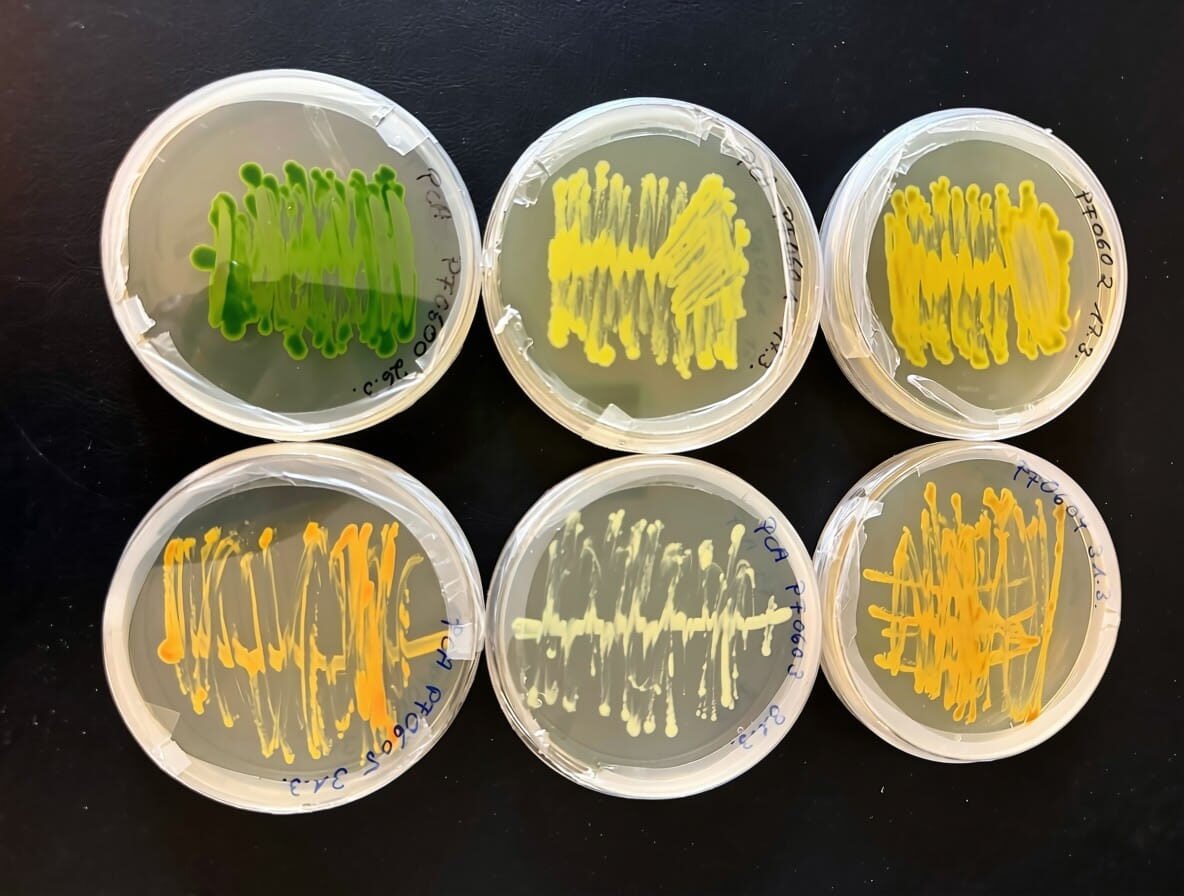
Our catalogue strains are available for licensing now, with commercial specification set jointly with the licensee. They include non-GMO Chlorella sp. in green, yellow and white variants. The Chlorella species in our catalogue are listed in the EU Novel Food Catalogue as not novel, so they sit outside the scope of the Novel Food Regulation.
The catalogue is a starting point. We work across microalgae more broadly, including Haematococcus pluvialis for astaxanthin, Porphyridium purpureum for sulphated exopolysaccharides, and Euglena and Scenedesmus. We also improve strains you already hold for what matters to you: productivity, protein or pigment content, nutrient profile, growth rate, or tolerance to your process conditions.
Regulatory status varies by species and we establish it during scoping. Identities and process detail under NDA, with fields of use, territories and exclusivity negotiable.
Commercial framework
How the deal is usually shaped
Licences are built around an upfront technology access fee plus a running royalty linked to production volume or net sales, scaled to the field of use, the territory and the degree of exclusivity granted. Where a strain or process needs development before it fits your specification, that work is quoted separately as a fixed-fee project, and what you pay for it is deducted from the upfront licence fee.
- Upfront technology access fee
- Running royalty on volume or net sales
- Exclusivity by field of use and territory
- Optional development phase, deducted from the upfront fee
Questions we are usually asked
Before you get in touch
Every strain in our portfolio is non-GMO, developed through selection, adaptation and non-recombinant improvement.
Our platforms sit at different stages, from laboratory validation to pilot scale. The technical dossier states the current stage of each platform.
Usually what you already have. The processes are designed for conventional stirred-tank fermentation and standard downstream unit operations, or for light-driven systems where the route is photoautotrophic, so there is no proprietary hardware to buy.
More usefully: we will tell you. Part of scoping is going through your existing equipment list with you and saying plainly what will work as it is, what needs a modification, and what is genuinely missing. If a piece of kit is needed, we say so early and help you specify it.
Case dependent. Depending on the strain and the process, protection rests on some combination of patents, proprietary know-how and trade secrets, and the balance differs from platform to platform. We set out which applies to the technology you are licensing during scoping, before anything is signed, so you know exactly what you are getting rights to and on what basis.
Yes, by field of use and territory, and for the term of the agreement. The degree of exclusivity is one of the levers that sets the commercial terms, so it is agreed case by case.
We normally work with species that already have an established route to market. Our catalogue Chlorella strains, for example, are listed in the EU Novel Food Catalogue as not novel, so the regulatory route is well established.
Where a target compound or a less common species does raise a question, we establish the position during scoping and tell you before you commit. Placing the finished product on the market remains the licensee’s responsibility, and we support the technical dossier that sits behind it.
Tell us which organism you want to work with
PhycoFerm, Lda., Universidade do Algarve, Campus de Gambelas, Faro, Portugal
Other ways to work with us
You want to buy the ingredient. Non-GMO Chlorella sp. with neutral colour and taste, and sulphated exopolysaccharides for skin care. Go to ingredients
You have a new target in mind. Fixed fee, fixed timeline, and you own the result, with no royalties. Go to services