
Insights › Bioprocess
Bioprocess
Heterotrophic microalgae fermentation, and why it changes the cost of algae
Growing microalgae in the dark on a sugar source sounds like a contradiction. It is also the main reason algal ingredients are becoming affordable enough for mainstream food.
PhycoFerm · 11 August 2026 · 8 minute read
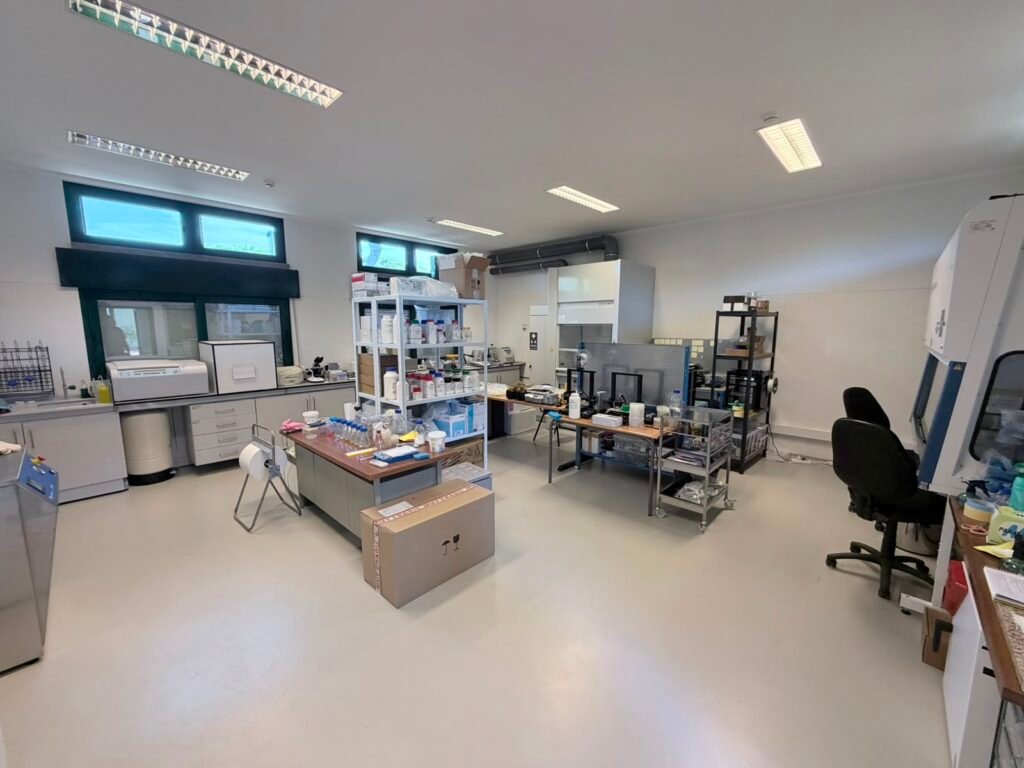
Closed fermentation removes light from the equation, which removes weather, season and land area with it.
Photoautotrophic production, and where it runs out
Most microalgae in commercial production are grown photoautotrophically: in ponds or photobioreactors, using light as the energy source and CO₂ as the carbon source. It works, it is elegant, and for some products it is the only sensible route. Astaxanthin from Haematococcus, for instance, depends on a light-stress phase that has no fermentation equivalent.
But light is a difficult input to scale. It arrives at a fixed intensity, it is only available for part of the day, it varies with season and weather, and it does not penetrate far into a dense culture. That last point is the binding constraint: as the culture gets denser, the cells at the surface shade the ones below, so productivity per unit volume falls exactly when you want it to rise. The practical consequence is low cell densities, large areas, large volumes of water to move and heat, and a harvest step that has to concentrate a very dilute suspension.
The cost problem with algae is rarely biology. It is the cost of moving and dewatering enormous volumes of dilute culture.
What changes in the dark
Heterotrophic cultivation replaces light with an organic carbon source, typically a sugar, and runs the culture in a closed stirred-tank fermenter, the same equipment class that produces yeast, enzymes and amino acids at industrial scale. Several things change at once:
- Cell density rises by an order of magnitude. Without self-shading there is no density ceiling imposed by light, so cultures reach tens of grams per litre rather than low single figures. Every downstream step gets cheaper because there is less water per kilogram of biomass.
- Output stops depending on the weather. Temperature, pH, dissolved oxygen and feed rate are all set points. The same process runs in January and July.
- Batches become comparable. This matters more than it sounds. A specification is only meaningful if the next batch resembles the last one, and controlled fermentation is what makes a certificate of analysis worth reading.
- The equipment already exists. Conventional stirred-tank fermentation capacity is available worldwide, much of it underused. You do not have to build a pond.
The catch, and it is a real one
You now have to buy the carbon. In photoautotrophic production the energy is free and the carbon comes from the air. In fermentation the substrate is typically the largest single line in the cost of goods, so the whole economic case rests on what you feed the culture and how efficiently the culture converts it.
This is why substrate choice is not a detail. Media formulated around agro-industrial side streams, molasses, whey permeate, starch residues, change that line item substantially, and they turn a waste disposal cost for someone else into an input for you. It is also where a lot of the process development effort actually goes: a strain that grows beautifully on pure glucose may struggle on a real side stream with its variable composition and its inhibitors.
Not every organism will do it
Heterotrophic growth is not a universal capability. Some microalgae cannot metabolise organic carbon in the dark at all. Others can but do it slowly, or lose the very compound you wanted, since pigment synthesis is often light-regulated. Selecting and adapting strains for heterotrophic performance is a substantial piece of work in itself, and it is a large part of why a strain and its process have to be developed as one thing.
Scaling it
A process that works at two litres does not automatically work at two thousand. Oxygen transfer, mixing time, shear, and the heat you now have to remove all change non-linearly with volume. Titre that looked robust in a bench reactor can fall by a third on the first pilot run, and the reasons are usually mundane: an oxygen limitation that did not exist at small scale, or a feed strategy that was tuned to a mixing regime you no longer have.
The way through is stage-gating: bench, controlled bioreactor, pilot, each with success criteria set before the run rather than after it. Real-time monitoring helps considerably here, because the interesting failures happen during the run and are invisible in an end-point assay.
Which route should you use
Fermentation where you need volume, consistency and a defensible cost per kilogram, which describes most food and feed protein applications. Photoautotrophic where the compound depends on light, which describes several high-value pigments. Sometimes both, in sequence, with a heterotrophic biomass phase followed by a light-driven induction phase.
The organism and the target compound decide the route.
Need a fermentation process that holds at scale?
We develop heterotrophic fermentation processes around your strain or ours, on circular media, and carry them through bioreactor and pilot validation.